




✨ Quick Overview
This guide by Dmytro Shevchenko helps Chicago homeowners select a garage door type based on architectural style and climate challenges. The primary focus is on mechanical durability during extreme temperature fluctuations.
Key Takeaways
- Sectional Doors are the Standard: They provide the best thermal insulation (up to R-20+) and can reduce heating costs by up to 25%.
- Low Headroom Solutions: Roll-up and Slide-to-side models are essential when overhead space is limited.
- Style vs. Practicality: Carriage House doors offer 100% ROI, but in Illinois, it is better to install sectional imitations (faux) rather than true swing-out doors.
- Budget Sector: Tilt-up doors remain the most affordable option but fall short in terms of safety and heat retention.
When homeowners start researching different types of garage doors, they quickly realize there are more options than just “the standard one”. Each type has unique mechanics, benefits, and best-use scenarios—especially in Northwest Chicago, where space constraints, harsh winters, road salt, and security concerns make the choice critical.
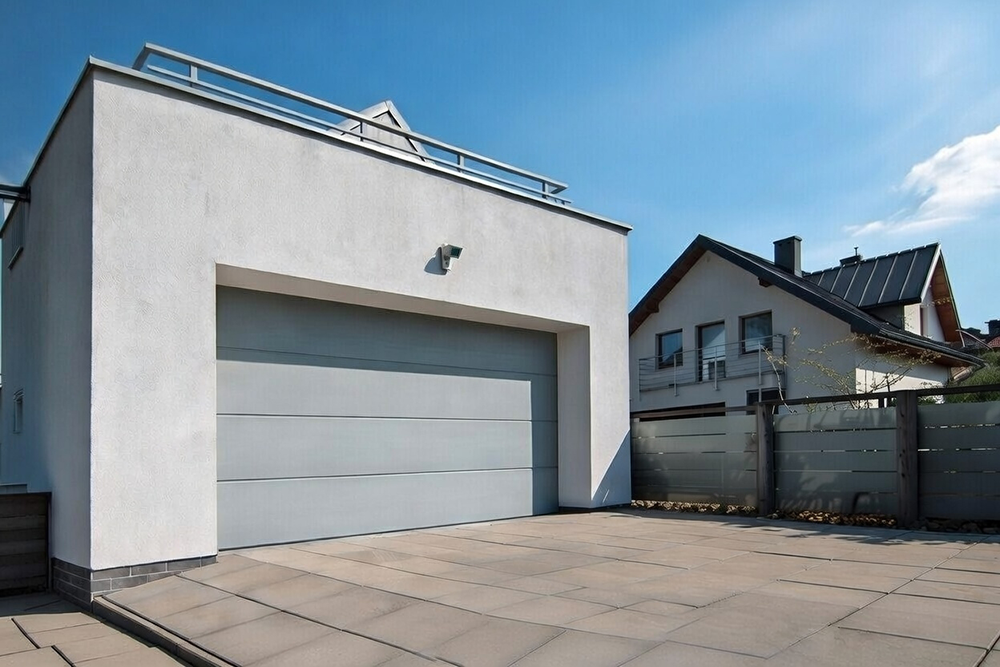
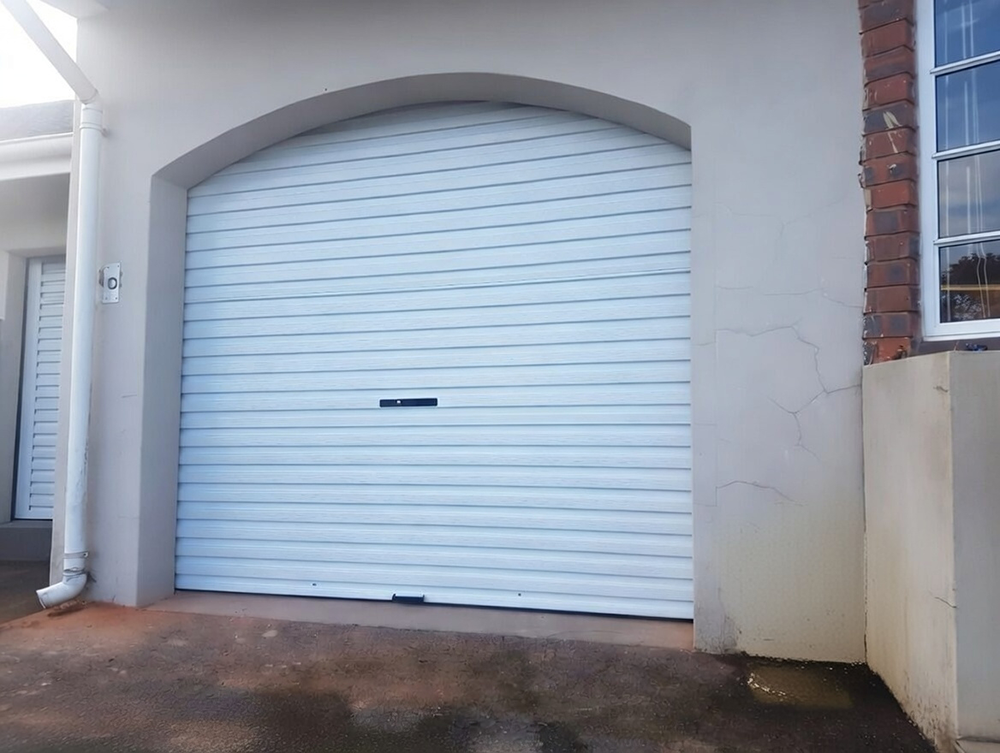
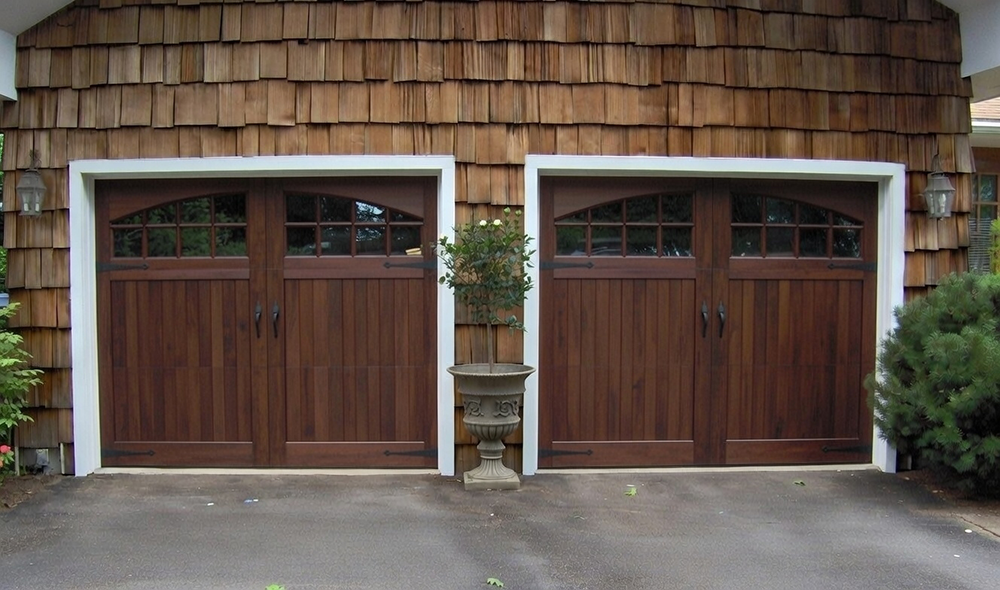
I’m Dmytro Shevchenko, master contractor at Prime Garage Door Repair. For over 10 years, I’ve been installing, repairing, and recommending garage doors across Park Ridge, Des Plaines, Mount Prospect, Evanston, and surrounding Illinois suburbs. I’ve seen which types fail during freeze-thaw cycles and which deliver years of reliable, low-maintenance service in our climate.
Choosing the wrong type can lead to frozen tracks, poor insulation, higher energy bills, or premature failure. Choosing the right one means smoother operation, better security, and long-term savings.
Main Different Types of Garage Doors
- Sectional garage doors (most popular for residential homes)
- Roll-up / coiling doors
- Carriage house / swing-out doors
- Tilt-up doors (canopy & retractable)
- Slide-to-side doors
- Other niche variations (high-lift, vertical lift, specialty systems)
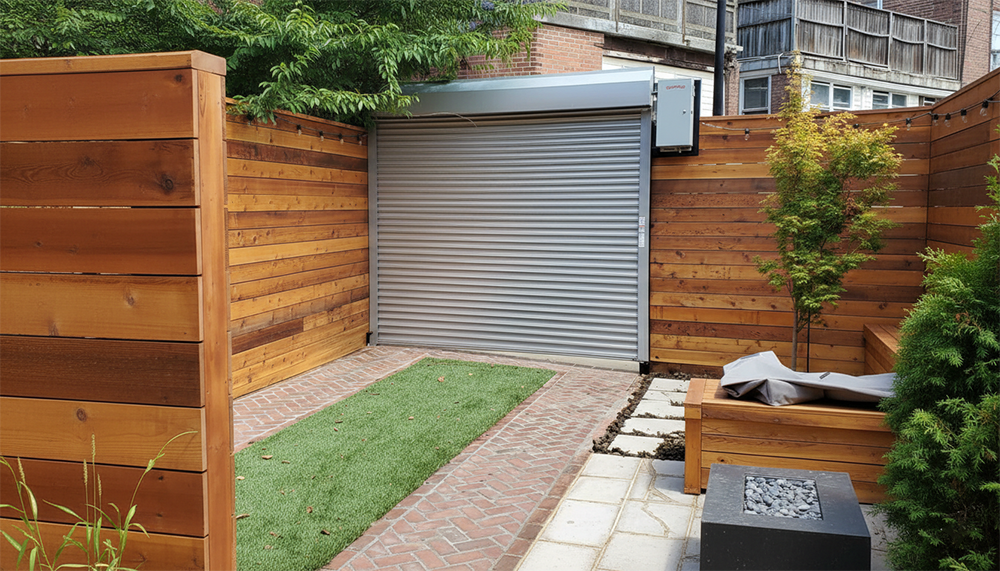
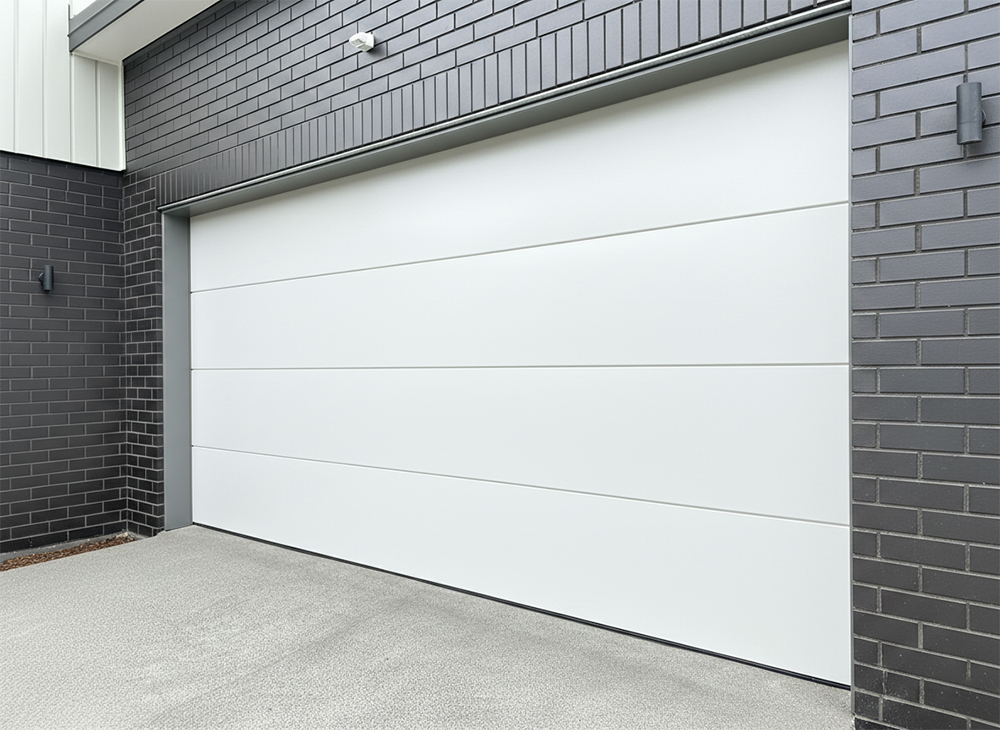
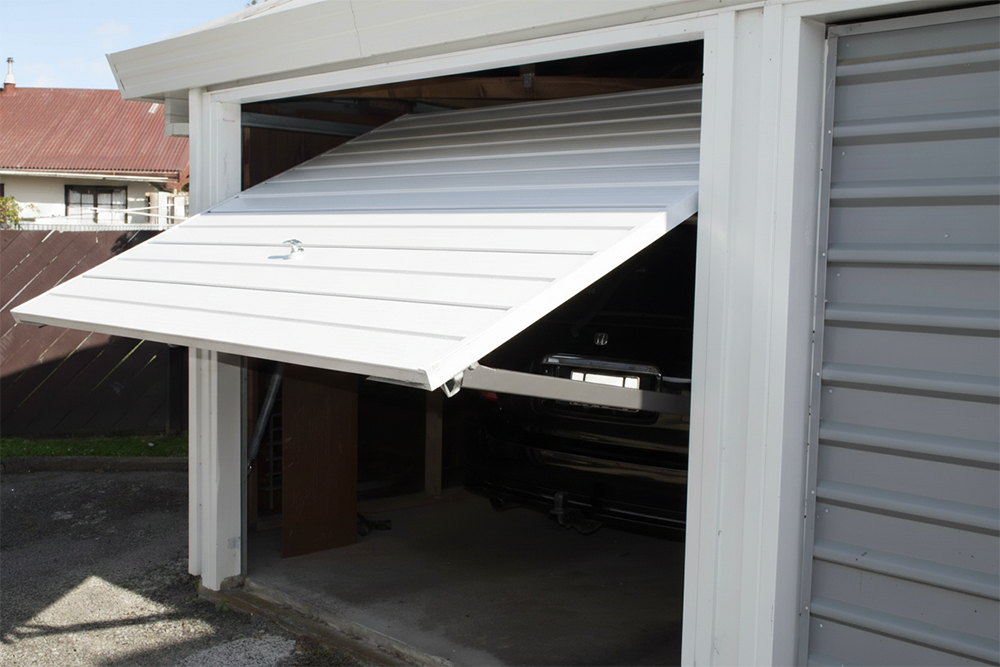
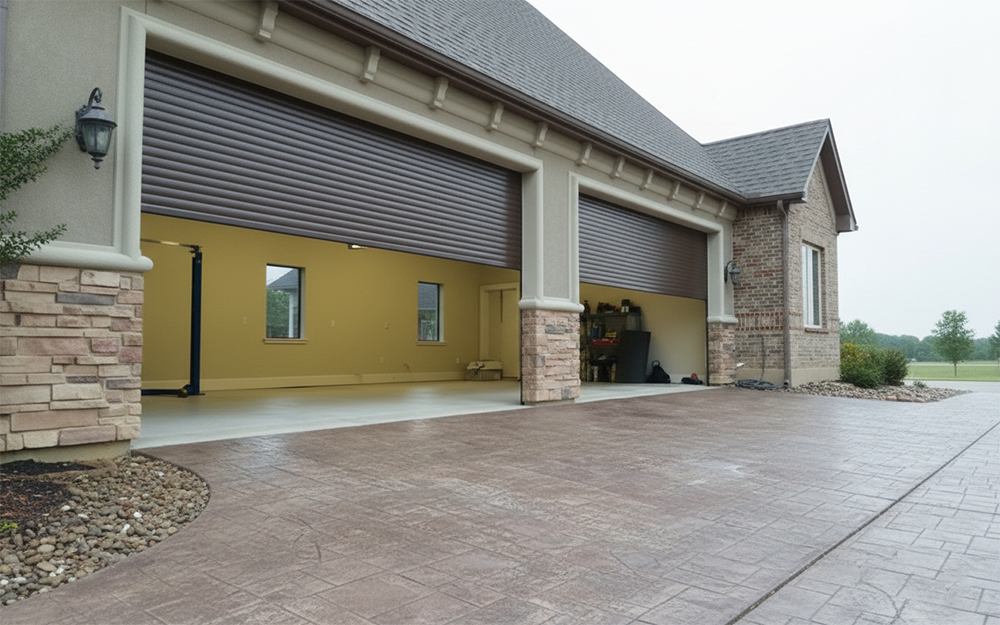
What This 2026 Guide Covers
- How each garage door type works, with clear visuals
- Pros, cons, and real-world performance in Chicago weather
- Typical installed costs in our area ($1,200–$5,000+)
- Professional recommendations based on home layout, usage, and budget
This article is part of our larger topic cluster—be sure to check the full Garage Door Options Guide for materials, styles, and pricing details. You may also find these related resources helpful: Types of Garage Doors and Types of Overhead Doors.
Ready to discover which type of garage door is right for your home? Let’s start.
Why Choosing the Right Type Matters
Selecting among the different types of garage doors isn’t just about looks — it’s a practical decision that affects daily convenience, home comfort, security, energy costs, and long-term maintenance.
In Northwest Chicago, where winters bring ice buildup, road salt corrosion, strong winds, and constant freeze-thaw cycles, the wrong garage door type can lead to frequent service calls, higher heating bills, and even safety issues.
From my 10+ years at Prime Garage Door Repair installing doors in Park Ridge, Des Plaines, Evanston, Mount Prospect, and nearby suburbs, I’ve seen the consequences of poor matches: sectional doors freezing in low-headroom garages, tilt-up doors requiring constant snow clearing, or uninsulated doors flooding attached living spaces with cold air.
Below are the key factors you should consider when choosing between different types of garage doors.
Garage Layout & Space Constraints
Headroom, driveway length, and ceiling obstructions largely determine which types are even possible.
- Sectional doors typically require 10–15 inches of headroom
- Roll-up / coiling doors need only 8–12 inches
- True swing-out carriage doors require clear driveway space to open
Many older Chicago-area homes have limited headroom or short driveways, making this step critical.
Climate & Weather Resistance
Chicago winters demand more than basic construction. Look for:
- Insulation of R-12 or higher
- Galvanized or corrosion-resistant materials
- Full perimeter weather seals
Insulated sectional doors perform best overall, while roll-up doors handle wind well but insulate less effectively.
Budget & Long-Term Costs
Installed prices in 2026 typically range from $1,200 (basic tilt-up) to $5,000+ (custom carriage or specialty doors).
Also factor in long-term costs:
- Proper insulation can reduce heating costs by 10–25% in attached garages
- Sectional doors require spring replacement every 7–10 years
- Cheaper doors often mean more repairs over time
Security & Functionality
Garages are a common entry point for break-ins. Modern garage door types offer:
- Reinforced panels and tracks
- Auto-reverse safety sensors
- Smart opener compatibility and monitoring
Heavier, better-built doors provide noticeably better security.
Aesthetics & Home Value
The type of garage door you choose directly impacts curb appeal and resale value:
- Carriage house doors add charm to historic homes
- Modern glass doors elevate contemporary builds
- Traditional sectionals provide broad, timeless appeal
Many homeowners see a significant return on investment after upgrading.
Quick Comparison of Different Types of Garage Doors
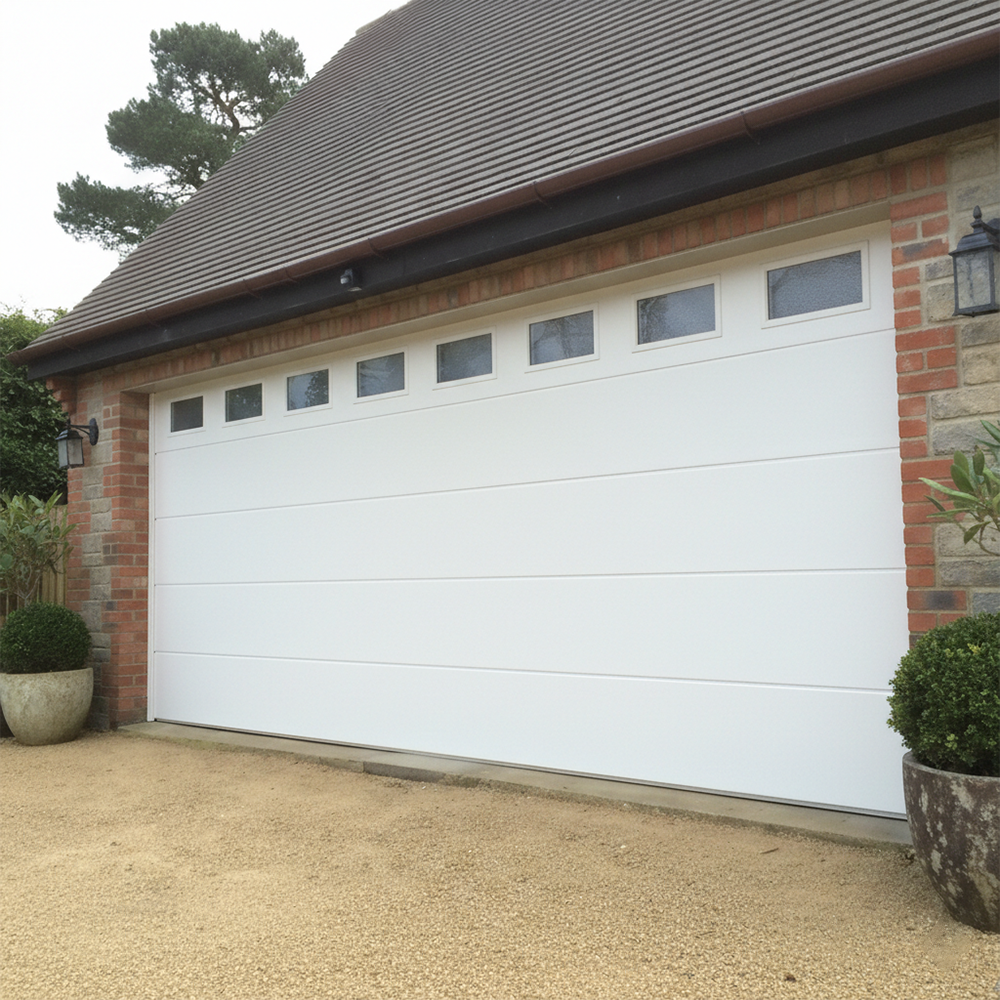
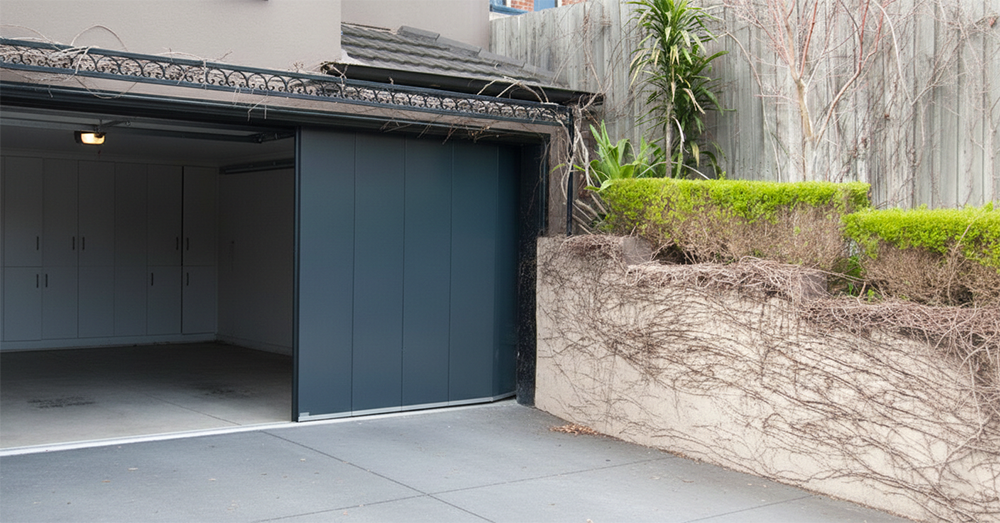
| Type | Space Needed | Insulation Level | Durability (Chicago Winters) | Typical Cost (Installed) | Best For |
|---|---|---|---|---|---|
| Sectional | Moderate headroom | High | Excellent | $1,500–$3,500 | Most residential homes |
| Roll-Up / Coiling | Low headroom | Medium | Excellent | $1,800–$3,800 | Low ceilings, commercial |
| Carriage House | Driveway clearance | High (faux) | Good | $2,500–$5,000+ | Historic / traditional homes |
| Tilt-Up | Driveway clearance | Low | Fair | $1,200–$2,500 | Budget, detached garages |
| Slide-to-Side | Side wall space | Medium | Good | $2,200–$4,000 | Obstructed ceilings |
Choosing wisely among the different types of garage doors ensures long-term reliability, comfort, security, and value in Northwest Chicago’s demanding conditions.
Next, let’s explore each garage door type in detail.
Sectional Garage Doors
Sectional garage doors are the most popular among the different types of garage doors, accounting for roughly 80–90% of residential installations in the U.S. — and even more in Northwest Chicago suburbs. Their combination of space efficiency, insulation performance, and long-term reliability makes them the top choice for attached garages in climates like ours.
How Sectional Garage Doors Work
Sectional doors are built from multiple horizontal panels (usually 3–8) connected by hinges. As the door opens, the panels bend at the hinges and roll upward along curved tracks mounted to the garage walls and ceiling.
A counterbalance system does most of the heavy lifting:
- Torsion springs mounted above the door (most common and durable)
- Extension springs along the sides (older or budget setups)
An electric opener (belt, chain, or direct drive) pulls the door smoothly, while safety features like auto-reverse sensors and pinch-resistant panels protect people and property.
Pros of Sectional Garage Doors
- Space Efficiency: No swing-out clearance required — ideal for short driveways in Park Ridge or Des Plaines
- Superior Insulation: Multi-layer polyurethane doors reach R-12 to R-20+, reducing heat loss in Chicago winters
- Customization: Huge range of styles, materials, windows, and smart-opener compatibility
- Quiet Operation: Belt-drive openers are nearly silent for homes with bedrooms above garages
- Durability: Galvanized steel resists road salt corrosion; lifespan of 20–30 years with maintenance
Cons of Sectional Garage Doors
- Headroom Requirement: Needs about 10–15 inches above the opening (not ideal for very low ceilings)
- Ongoing Maintenance: Springs, rollers, and hinges should be inspected annually ($100–$200 typical)
- Higher Initial Cost: Insulated models usually run $1,500–$3,500 installed
Performance in Chicago Weather
In freeze-thaw conditions, insulated sectional doors outperform most alternatives. Tight perimeter seals prevent drafts, while rigid panels reduce ice buildup on tracks.
In a recent Evanston installation, a homeowner upgraded from a non-insulated door to an R-18 sectional and reported a 20% reduction in heating costs during the first winter alone.
Trends for 2026
- High-lift sectional systems for taller vehicles and storage
- Eco-friendly recycled steel construction
- Smart openers with app control, cameras, and integrated lighting
For most homeowners, sectional garage doors remain the best all-around option among the different types of garage doors — especially in Northwest Chicago’s demanding climate.
For related configurations and mechanics, see our guide on Types of Overhead Doors.
Roll-Up / Coiling Garage Doors
Roll-up (also called coiling) garage doors stand out among the different types of garage doors for their compact footprint and extreme durability. While most commonly used in commercial and industrial buildings, they are also an excellent residential solution in Northwest Chicago when headroom is limited or security is a priority.
I often recommend roll-up doors for detached garages, workshops, converted industrial spaces, or older homes with exposed beams, pipes, or HVAC ducts where standard sectional tracks simply won’t fit.
How Roll-Up / Coiling Garage Doors Work
A roll-up garage door is constructed from narrow, interlocking horizontal slats made of steel or aluminum. These slats form a flexible curtain.
When the door opens, the curtain coils tightly around a barrel or drum mounted directly above the opening. Vertical side tracks guide the door up and down. There are no ceiling-mounted tracks extending into the garage.
Operation can be manual (chain hoist) or motorized. Headroom requirements are minimal — typically 8–12 inches. Modern systems include tension monitoring and bottom-edge safety sensors.
Pros of Roll-Up / Coiling Garage Doors
- Low Headroom Solution: Ideal for garages with ducts or beams, common in older Evanston properties
- High Durability: Impact-resistant slats withstand high winds (some models rated up to 200 mph)
- Minimal Maintenance: Fewer moving parts; no torsion springs to retune regularly
- Strong Security: Solid steel curtain provides excellent protection for tools and valuables
- Customization: Insulated slats, ventilation slots, or perforated designs available
Cons of Roll-Up / Coiling Garage Doors
- Limited Insulation: Even insulated models typically max out at R-10 to R-12
- Noisier Operation: Coiling action produces more sound than smooth sectional tracks
- Industrial Appearance: Less residential curb appeal without custom finishes
- Higher Cost: Quality residential installs usually run $1,800–$3,800
Performance in Chicago Weather
Galvanized steel or aluminum slats perform well against road salt and moisture. Tight side guides and bottom seals block drifting snow.
In a Park Ridge commercial-to-residential conversion I worked on, a roll-up door survived multiple blizzards without warping or freezing — something the previous sectional door struggled with.
Trends for 2026
- High-speed residential roll-up systems for faster access
- Eco-friendly recycled aluminum slats
- Integrated smart locks and access control
Roll-up / coiling doors fill a specific but important niche among the different types of garage doors — offering unmatched strength and space savings when standard sectionals won’t work.
For a broader look at door mechanics, see Garage Door Opening Styles.
Carriage House / Swing-Out Garage Doors
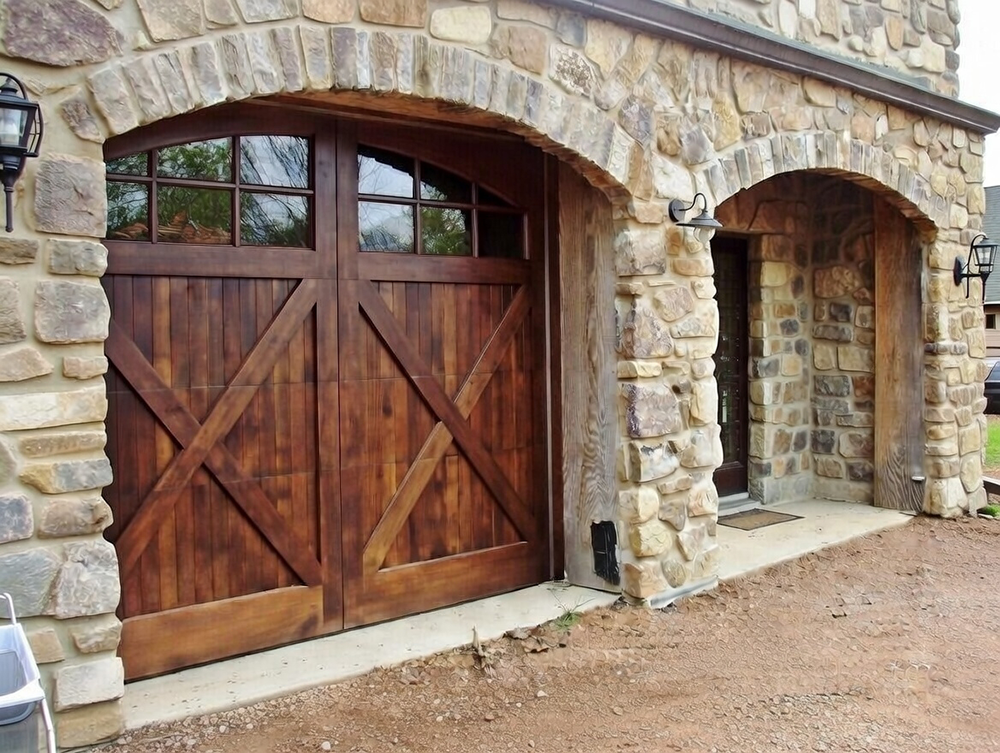
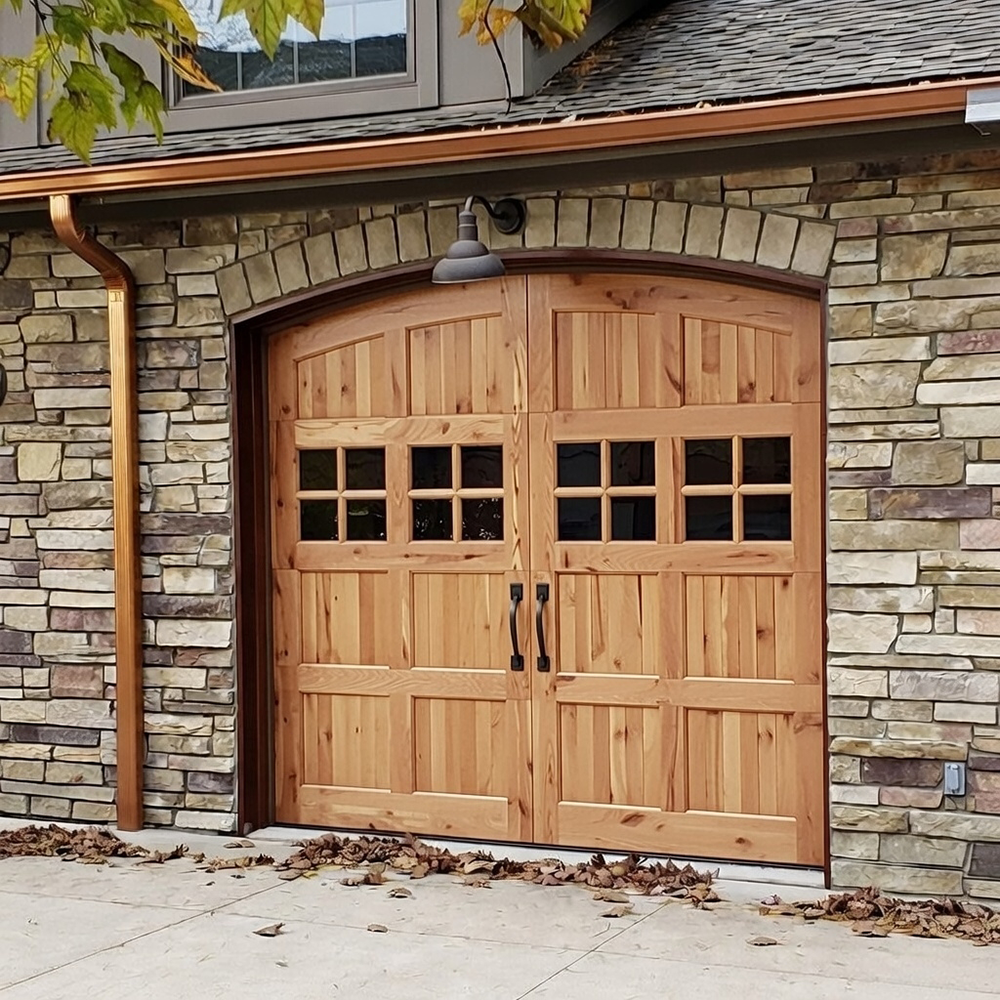
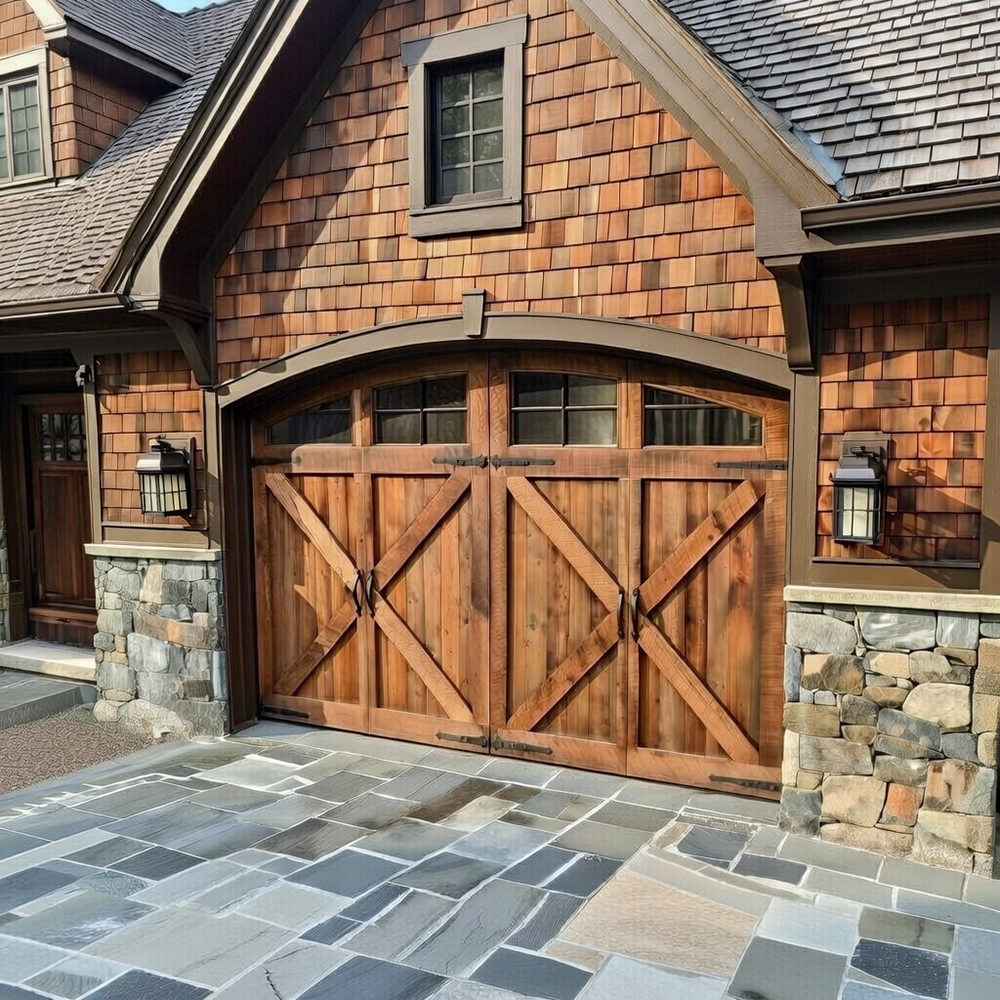
Carriage house (also called swing-out) garage doors offer one of the most distinctive looks among the different types of garage doors, inspired by historic barns and carriage houses. In Northwest Chicago’s older neighborhoods — including Evanston historic districts and Park Ridge bungalows — this style is especially popular for its timeless character and architectural harmony.
There are two main versions:
- True swing-out doors — hinged doors that physically open outward like barn doors
- Faux carriage house doors — modern sectional doors with decorative overlays, straps, and hardware to mimic the swing-out look
Today, faux carriage doors dominate residential installations because they preserve the classic appearance while delivering the insulation, reliability, and automation of sectional systems.
How Carriage House / Swing-Out Garage Doors Work
True swing-out: Two panels (for a single-car opening) are hinged on the sides and swing outward manually or with specialized arm operators. There are no overhead tracks or torsion springs — only heavy-duty hinges and latching hardware.
Faux carriage house: A standard sectional garage door fitted with decorative crossbeams, handles, and straps. The door opens vertically along tracks like a traditional sectional.
True swing-outs require precise alignment to prevent sagging over time, especially with heavier wood constructions. Faux versions eliminate this issue entirely.
Pros of Carriage House / Swing-Out Garage Doors
- Exceptional Curb Appeal: Instantly elevates the home’s facade; often delivers 100%+ ROI on resale
- Authentic Historic Look: Ideal for craftsman, colonial, and older architectural styles
- No Overhead Space Needed (true swing-out): Frees ceiling for storage or lifts
- High Customization: Wood grain textures, arched tops, wrought-iron hardware, window grids
Cons of Carriage House / Swing-Out Garage Doors
- Driveway Clearance Required (true swing-out): Needs 3–5 ft outside; impractical for tight lots
- Higher Cost: Typically $2,500–$5,000+ installed
- Maintenance: Hinges require greasing; real wood needs periodic sealing
- Automation Complexity: True swing-outs are harder to motorize
Performance in Chicago Weather
Steel-based faux carriage doors with polyurethane insulation perform exceptionally well in Chicago winters. Galvanized skins resist road salt corrosion, while full perimeter seals prevent ice buildup.
In several Niles installations, clients chose insulated faux carriage models and reported consistent performance and visual appeal through multiple harsh winters.
Chicago Recommendations
For brick or historic homes in Evanston or Park Ridge, I recommend insulated faux carriage doors from Amarr with black decorative hardware. You get the classic look without the clearance, maintenance, or automation issues of true swing-outs.
Carriage house doors add unmatched character among the different types of garage doors, especially for traditional homes. For more inspiration, see [Traditional Garage Door Styles].
Tilt-Up Garage Doors
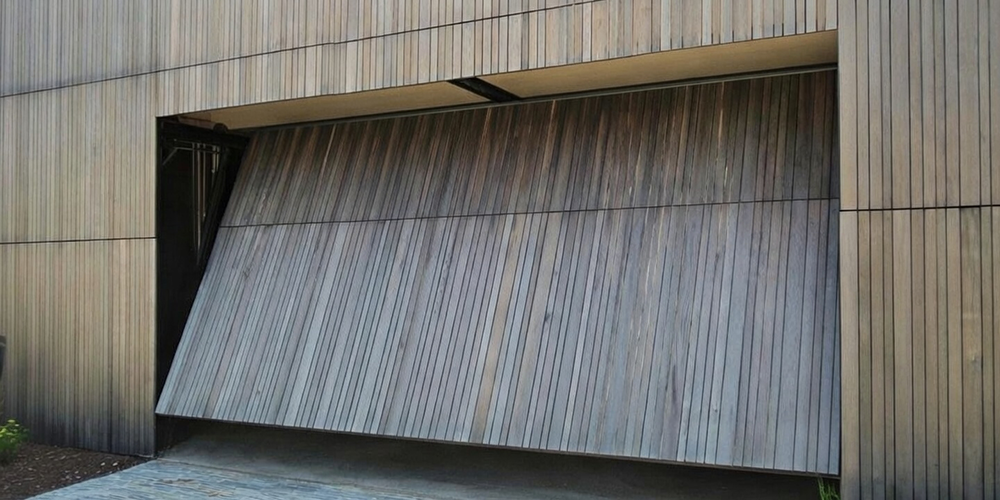
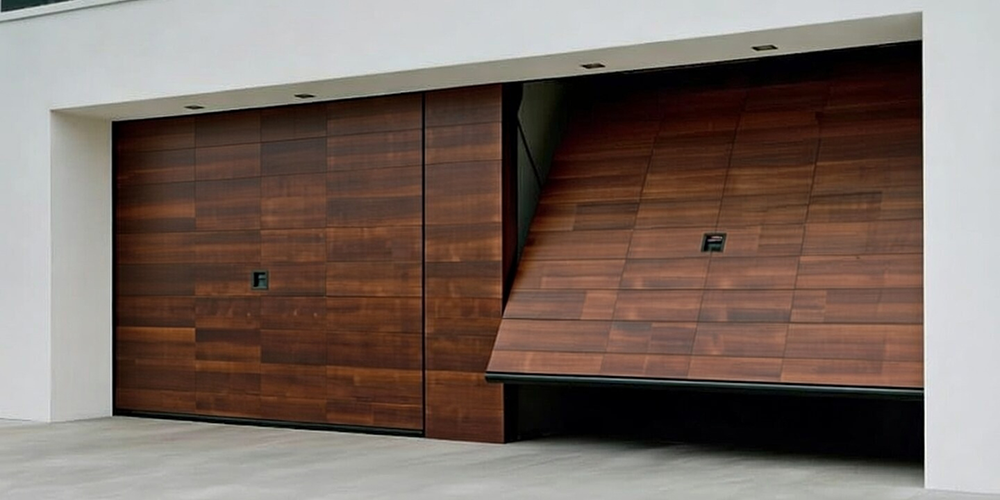
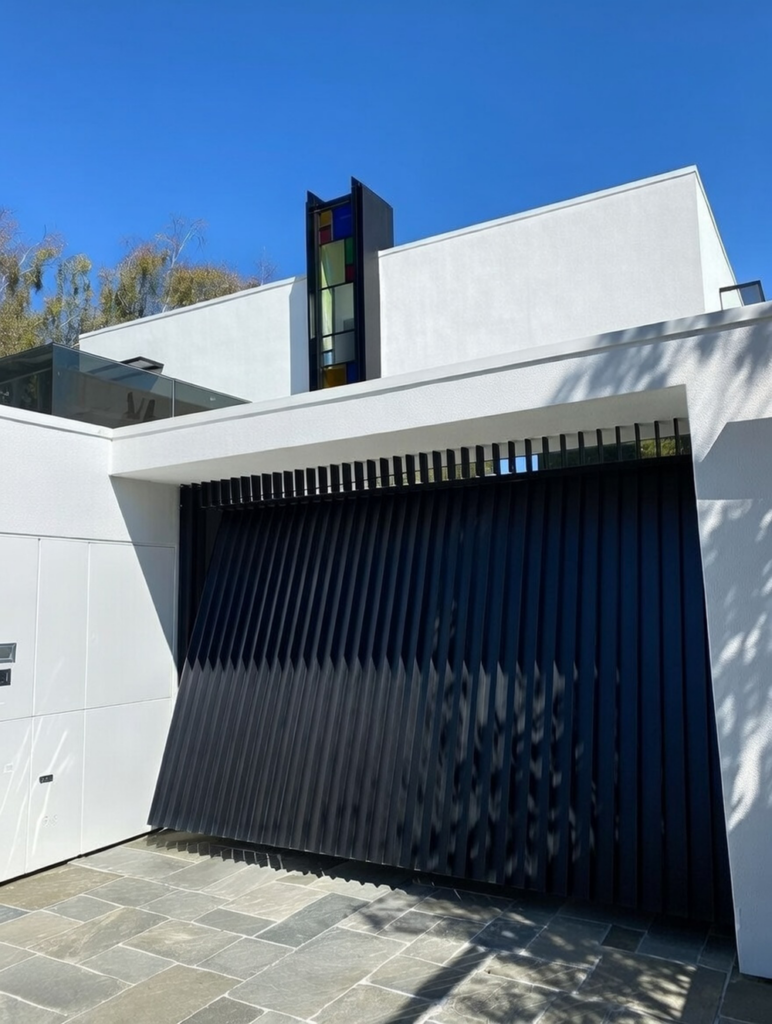
Tilt-up garage doors are a simpler, one-piece option among the different types of garage doors. They’re most often found in older homes or used as budget-friendly replacements. In Northwest Chicago — where insulation, wind resistance, and space efficiency matter — tilt-up doors account for less than 5% of new installations, but they still have practical uses for detached garages or light-duty retrofits.
There are two main subtypes:
- Canopy tilt-up — tilts outward and remains partially outside like an awning when open
- Retractable tilt-up — fully retracts into the garage along ceiling tracks
How Tilt-Up Garage Doors Work
A tilt-up door is a single rigid panel that pivots upward as one piece. Side arms, rollers, or pivot hardware guide the movement, while springs or counterweights assist with lifting.
The canopy style leaves roughly one-third of the door protruding outside when open. The retractable style uses tracks to pull the entire door fully inside the garage.
There are no hinges between panels and no coiling mechanism — making tilt-up doors mechanically simple and suitable for light, occasional use.
Pros of Tilt-Up Garage Doors
- Simplicity: Fewer moving parts mean fewer failures and easier repairs
- Budget-Friendly: Installed cost typically $1,200–$2,500
- Classic Look: Fits mid-century or basic home designs
- No Headroom Needed (canopy): Opens outward, freeing interior ceiling space
Cons of Tilt-Up Garage Doors
- Poor Insulation: Usually R-0 to R-6; drafts are common in winter
- Driveway Clearance Required: Snow and ice can block canopy doors
- Limited Security: Easier to pry open; fewer smart or safety features
- Outdated Design: Fewer replacement parts; limited wind resistance
Performance in Chicago Weather
Steel tilt-up doors tolerate road salt reasonably well, but their weak perimeter sealing allows cold air and moisture intrusion. In a Niles retrofit, a client installed a retractable tilt-up on a detached garage and added heavy-duty weatherstripping to reduce winter drafts — a common workaround.
Chicago Recommendations
For pre-1970s homes in Evanston or Park Ridge with strict budgets, a steel canopy tilt-up can work only if driveway clearance allows. For attached garages or daily use, upgrading to a sectional door is almost always the better long-term choice.
Tilt-up doors still serve basic needs among the different types of garage doors, but in most Northwest Chicago homes they are outperformed by modern sectional alternatives. For more comparisons, see Types of Overhead Doors.
Slide-to-Side Garage Doors
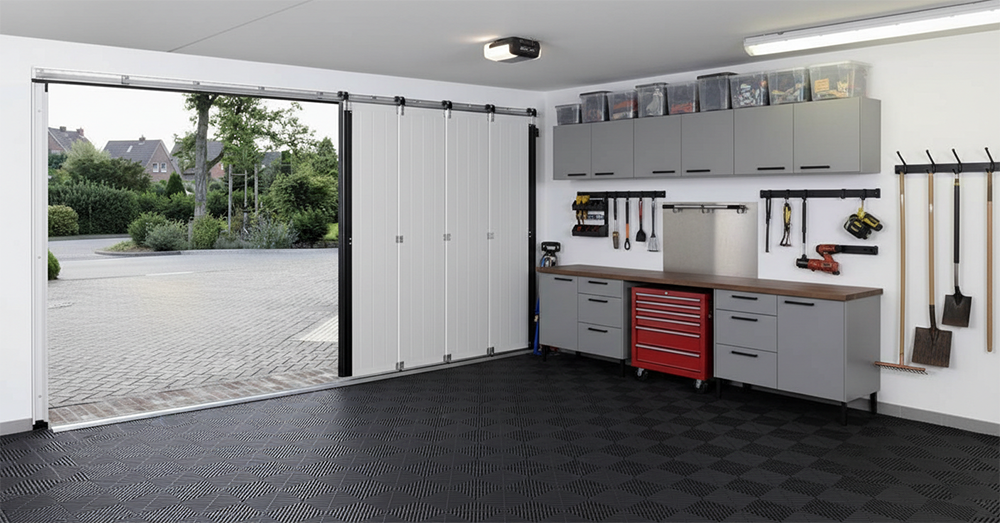
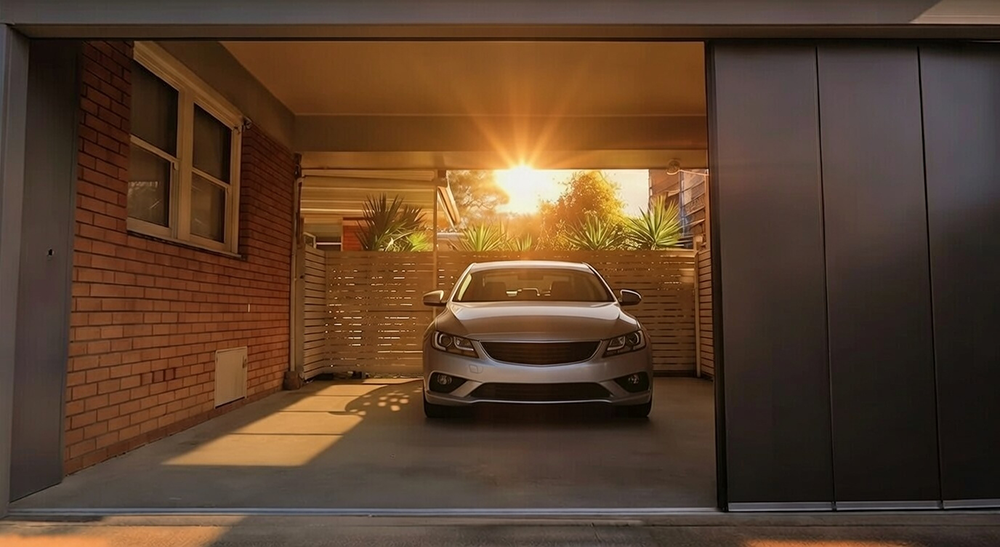
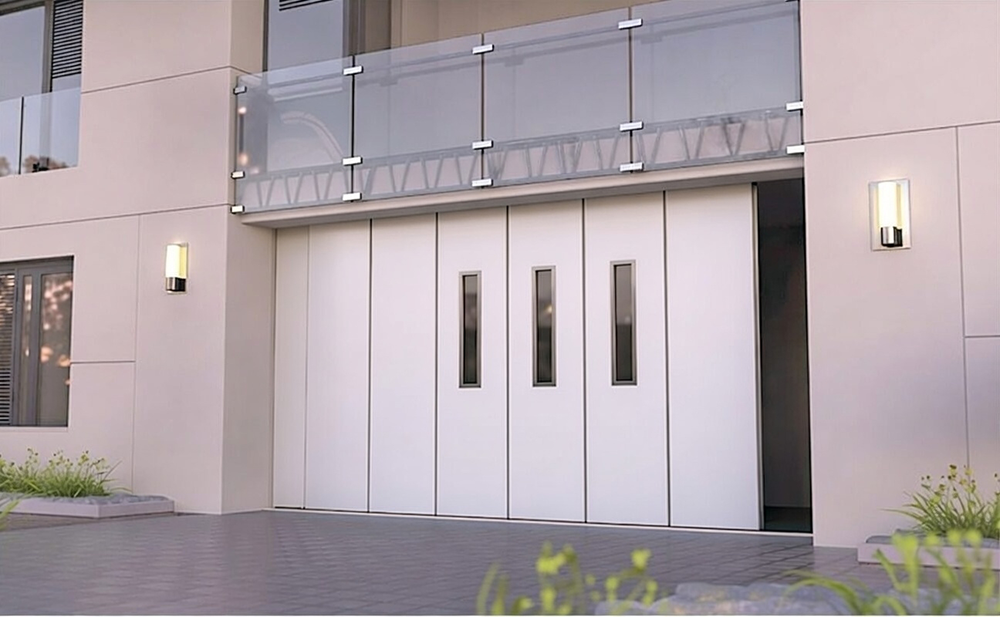
Slide-to-side garage doors (also called side-sliding or round-the-corner doors) are a less common but highly practical option among the different types of garage doors. They’re especially useful for garages with limited headroom or ceiling obstructions — a frequent issue in older Northwest Chicago homes in areas like Evanston, Niles, or Des Plaines, where exposed beams, sloped ceilings, or HVAC ducts make overhead tracks impractical.
How Slide-to-Side Garage Doors Work
Instead of lifting upward, this door moves horizontally. It’s built from hinged panels similar to a sectional door, but the panels glide along a bottom track and then curve around the inside wall of the garage (typically to one side).
Rollers guide the panels smoothly, and the door can be operated manually or with a side-mounted electric opener. Because it doesn’t lift overhead, no ceiling clearance is required. However, it does require a clear interior wall space equal to the door’s full width.
Pros of Slide-to-Side Garage Doors
- No Headroom Needed: Ideal for garages with beams, ducts, or vaulted ceilings
- Quiet & Smooth Operation: Generally quieter than roll-up doors
- Partial Opening: Can open just partway for ventilation or quick access
- Ceiling Space Freed: Leaves room for storage, lighting, or lifts
- Customization: Available in insulated steel and other finishes
Cons of Slide-to-Side Garage Doors
- Wall Space Required: Needs one clear interior wall; not ideal for narrow garages
- Higher Cost & Rarity: Installed price typically $2,200–$4,000
- Limited Availability in the U.S.: Parts and service can be harder to source
- Moderate Insulation: Usually R-8 to R-12 without upgrades
- Installation Complexity: Track alignment must be precise
Performance in Chicago Weather
With proper perimeter seals, slide-to-side doors resist drafts and snow intrusion effectively. In a Des Plaines installation for a home with a sloped ceiling, this design eliminated headroom issues while maintaining reliable winter performance.
Chicago Recommendations
For renovated or modern homes in Mount Prospect or Evanston with ceiling constraints, an insulated steel slide-to-side door is a smart niche solution. While not common, it’s extremely effective when overhead options simply won’t work.
Slide-to-side doors offer a creative, space-saving alternative among the different types of garage doors. For more comparisons of opening mechanisms, see [Garage Door Opening Styles].
Other Types & Variations
While the main different types of garage doors cover most residential needs, there are several specialized variations designed for unique scenarios. In Northwest Chicago, these account for less than 5% of installations but are extremely valuable for tall vehicles, high-traffic garages, workshops, or custom-built homes.
High-Lift Garage Doors
High-lift garage doors are a variation of sectional doors where the tracks extend higher up the wall before curving inward. This allows the door to travel vertically for several extra feet, creating more clearance below.
How they work:
Standard sectional panels use extended vertical tracks (typically 2–6 feet higher than normal) before turning horizontal.
Pros:
- Maximizes vertical clearance for tall SUVs, trucks, or car lifts
- Ideal for overhead storage or mezzanine garages
- Retains all sectional benefits (insulation, quiet operation)
Cons:
- Requires tall walls (typically 12–18 ft ceilings)
- Adds $200–$500 to installation cost
- More complex retrofit in older homes
Chicago use:
Common in newer Mount Prospect and Des Plaines homes with high ceilings. I’ve installed high-lift systems for clients storing boats, lifted trucks, or using ceiling-mounted storage.
Vertical Lift Garage Doors
Vertical lift garage doors are an industrial-style solution where the door rises straight up along wall-mounted tracks without curving toward the ceiling.
How they work:
Panels travel vertically like an elevator, staying close to the wall and stopping fully above the opening.
Pros:
- No ceiling obstruction at all
- Extremely durable and heavy-duty
- Ideal for commercial or industrial use
Cons:
- Requires very tall walls (door height + full lift clearance)
- High cost: $3,000–$6,000+
- Rare and impractical for most homes
Chicago use:
Primarily warehouses and commercial buildings in areas like Niles. Occasionally used in custom residential garages with exceptionally tall walls.
High-Speed Garage Doors
High-speed garage doors are designed for rapid opening and closing, reducing heat loss and improving efficiency in high-traffic environments.
How they work:
Reinforced sectional or roll-up doors paired with high-torque motors and frequency drives, operating at speeds of 2–3 feet per second.
Pros:
- Minimizes heat loss in heated garages
- Built for heavy daily use (50,000+ cycles)
- Advanced safety sensors and controls
Cons:
- Expensive: $3,000–$8,000+
- Primarily commercial-grade
- Limited residential design options
Chicago use:
Auto shops, fleet garages, and heated detached workshops in Des Plaines and surrounding areas where doors open dozens of times per day.
These specialized options expand the possibilities among the different types of garage doors, but for the majority of Northwest Chicago homes, a properly insulated sectional door remains the most practical and cost-effective solution.
Comparison Table & Cost Considerations
To summarize the different types of garage doors and help you choose the best option for Northwest Chicago, below is a clear comparison table with practical factors and realistic 2026 installed costs. Prices are based on a standard single-car door (9×7 ft) and include professional installation, removal of the old door, and basic hardware.
| Type | Headroom Needed | Insulation (R-Value) | Durability vs. Salt/Snow | Noise Level | Avg. Installed Cost (Chicago 2026) | Best For in NW Chicago | My Recommendation |
|---|---|---|---|---|---|---|---|
| Sectional | 10–15 inches | High (R-12–20+) | Excellent | Quiet | $1,500–$3,500 | Attached residential garages | ★★★★★ (Top choice) |
| Roll-Up / Coiling | 8–12 inches | Medium (R-8–12) | Excellent | Moderate | $1,800–$3,800 | Low ceilings, workshops, commercial | ★★★★☆ |
| Carriage House / Swing-Out | Driveway clearance | High (faux: R-12+) | Good | Quiet | $2,500–$5,000+ | Historic / traditional homes | ★★★★☆ (Style-focused) |
| Tilt-Up (Canopy / Retractable) | Driveway clearance | Low (R-0–6) | Fair | Quiet | $1,200–$2,500 | Budget, detached garages | ★★☆☆☆ |
| Slide-to-Side | Side wall space | Medium (R-8–12) | Good | Quiet | $2,200–$4,000 | Obstructed ceilings | ★★★☆☆ (Niche) |
| High-Lift / Variations | Extended (12+ inches) | High (R-12–20+) | Excellent | Quiet | $1,800–$4,000+ | Tall vehicles, custom garages | ★★★★☆ (Specialized) |
Key Cost Notes for the Chicago Area
- Prices include professional installation (strongly recommended for safety and warranty protection).
- Add $200–$600 for smart openers, upgraded insulation, battery backup, or wind-rated hardware.
- Double-car doors (16×7 ft) typically add 50–100% to the total cost.
- Energy-efficient insulated doors can reduce winter heating loss by 10–25%.
Bottom line: From my experience, sectional doors are the best all-around option among the different types of garage doors for Chicago homes — reliable, efficient, and cost-effective. Choose roll-up doors when headroom is tight, and carriage house doors when curb appeal is the priority.
Still unsure? Don’t guess. Contact me for a free on-site consultation. I serve Park Ridge, Des Plaines, Evanston, and surrounding suburbs, and I’ll recommend the right solution using trusted brands like Amarr and Clopay.
Ready to upgrade? Schedule your free quote today with Prime Garage Door Repair — let’s make your garage warmer, quieter, and more reliable.
Thanks for reading. Explore more in our complete Garage Door Options Guide.

Dmytro Shevchenko is the owner and lead technician at Prime Garage Door Repair, located at 25975 N Diamond Lake Rd, Unit 111, Mundelein, IL 60060. Known for his honest service and expert craftsmanship, he ensures every garage door operates safely and smoothly for families and companies across the Chicago suburbs.

estimate