




Freezing temperatures can be harsh on your home, often causing frustrating garage door problems in winter. Cold air and ice often lead to frozen components, making it difficult to open or close your door and compromising your home’s security.
Understanding how to address these issues is vital for keeping your door functional. In this guide, we explore common garage door problems in winter and provide practical solutions so you know when to handle repairs yourself and when to call a professional.
Summary
This guide covers why garage doors freeze in winter (ice buildup, metal contraction, poor insulation) and how to safely free them without causing damage. It includes a step-by-step thaw-and-lubricate process, preventive maintenance tactics (weather stripping, lubrication, clearing snow, opener sensitivity, insulation), and clear signs to call a professional. Illinois-specific tips emphasize pre-season inspections and routine care for harsh conditions. Following these practices helps keep your garage door reliable and secure all winter.
Common Garage Door Problems in Winter
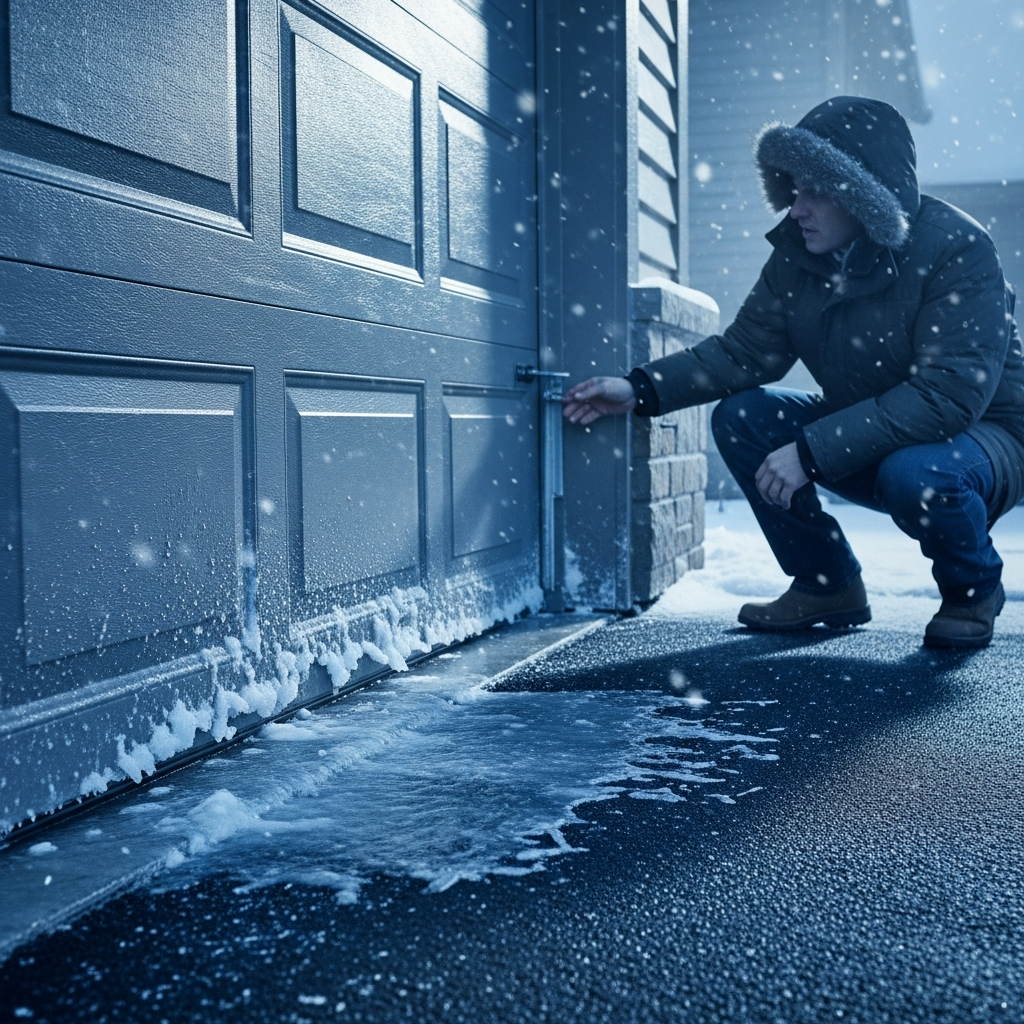
Winter introduces several challenges for garage doors, affecting their performance and longevity. The most common issues arise from cold weather’s impact on metal components and electronic systems.
Freezing Temperatures: Cold causes metal parts to contract, resulting in misalignment. This misalignment can make the door noisy or prevent it from opening smoothly.
Ice and Snow Buildup: These elements accumulate around tracks and sensors. This buildup can obstruct the door’s path, causing it to jam or move sluggishly.
Lack of Lubrication: Metal parts may stick or become stiff without proper lubrication. Cold weather exacerbates this, leading to unnecessary wear and tear.
Weather Stripping Issues: Winter can make weather stripping brittle and ineffective. This can increase energy bills by letting in drafts and cold air.
Here’s a quick list of the most common problems:
- Misaligned door due to temperature changes.
- Tracks obstructed by ice or snow.
- Stiff moving parts from insufficient lubrication.
- Brittle weather stripping letting cold air in.
Identifying these common problems early can save you from bigger headaches later. Regular maintenance can help identify and address these issues quickly.
Why Do Garage Doors Freeze?
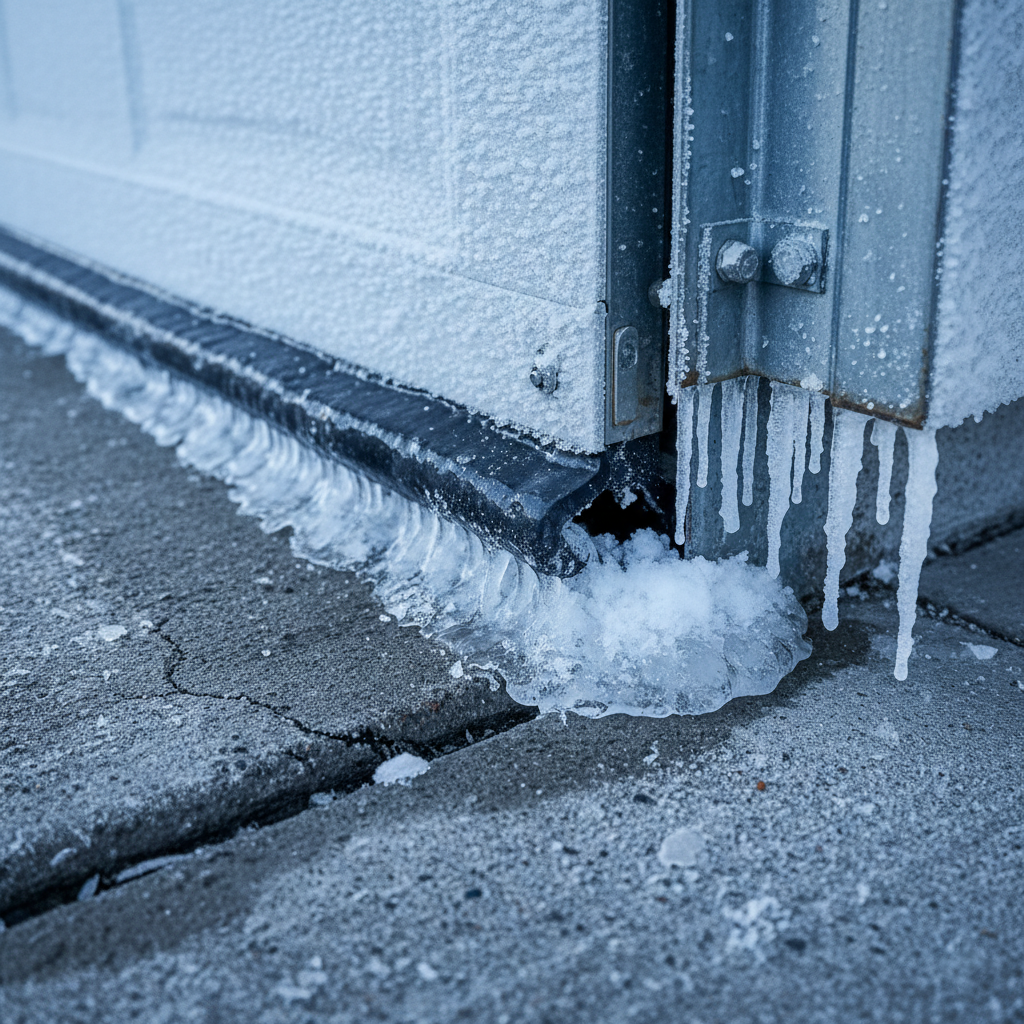
Understanding why garage doors freeze in winter starts with recognizing the impact of cold weather. Ice can form on door seals and tracks, obstructing movement. This is exacerbated by snow and sleet that penetrate seams and crevices.
Another reason involves the contraction of metal parts in low temperatures. As they shrink, gaps may develop, allowing moisture to accumulate. This moisture can freeze, leading to further operational hindrances.
Finally, poor insulation plays a significant role in freezing. Uninsulated doors allow cold air to penetrate the garage, increasing the likelihood of ice formation. Over time, this can worsen performance and even cause mechanical failures. Enhancing the door’s insulation can significantly reduce these issues. Regular monitoring of these factors can help mitigate potential freezing problems.
Step-by-Step Guide to Fixing a Frozen Garage Door
When your garage door freezes, quick and safe solutions are essential. Start by carefully assessing the door without forcing it open. Forcing can cause damage or serious injury.
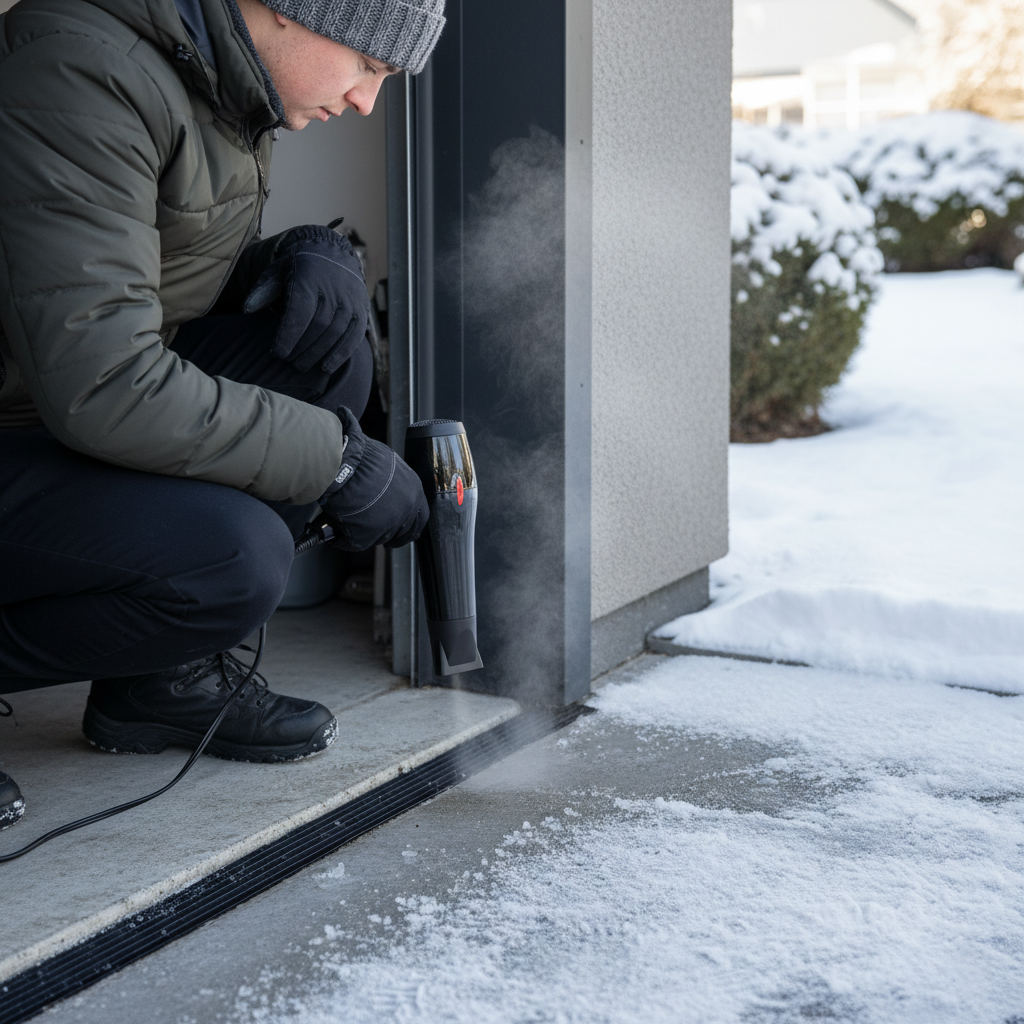
Next, inspect the base of the door where it meets the ground. Look for ice buildup along the seals. If you spot ice, grab a hairdryer. Use it on a low setting to gently melt the ice away.
Check for any ice on the tracks that may obstruct smooth operation. Use the hairdryer here too, or pour lukewarm water to soften the ice. Avoid boiling water as it may warp materials.
Now, examine the door’s moving parts like springs and rollers. Apply a suitable lubricant designed for extreme cold to prevent sticking.
Here are steps to follow:
- Disconnect the Opener: Pull the emergency release handle.
- Clear Ice: Use a hairdryer or lukewarm water.
- Lubricate Parts: Focus on springs and rollers.
- Reconnect the Opener: Test the door manually before reattaching.
Finally, test the door manually to ensure smooth operation. If satisfied, reconnect the opener and try using the remote. If the door remains stuck or noisy, professional help is advisable. Skilled technicians can troubleshoot more complex issues effectively. This will ensure your garage door operates well throughout the winter months.
Still have a question? Call us 847-305-4535
Real Customer Feedback for Prime Garage Door Repair


Preventing Winter Garage Door Issues
Preventive measures can save you hassle during winter months. Simple steps ensure your garage door stays functional.
Begin by inspecting weather stripping for cracks. Replace it if brittle, to seal out drafts and retain warmth.
Regular lubrication is essential. Apply lubricant to all moving parts before temperatures drop. It prevents parts from freezing and sticking.
Keep the area around the garage door clear of snow and ice. Shovel regularly to ensure the door opens and closes without hindrance.
Adjust your opener’s sensitivity settings. This helps it function smoothly in cold temperatures

Dmytro Shevchenko is the owner and lead technician at Prime Garage Door Repair, located at 25975 N Diamond Lake Rd, Unit 111, Mundelein, IL 60060. Known for his honest service and expert craftsmanship, he ensures every garage door operates safely and smoothly for families and companies across the Chicago suburbs.

estimate